
Part S Building Regulations: EV Charger Requirements for New Builds
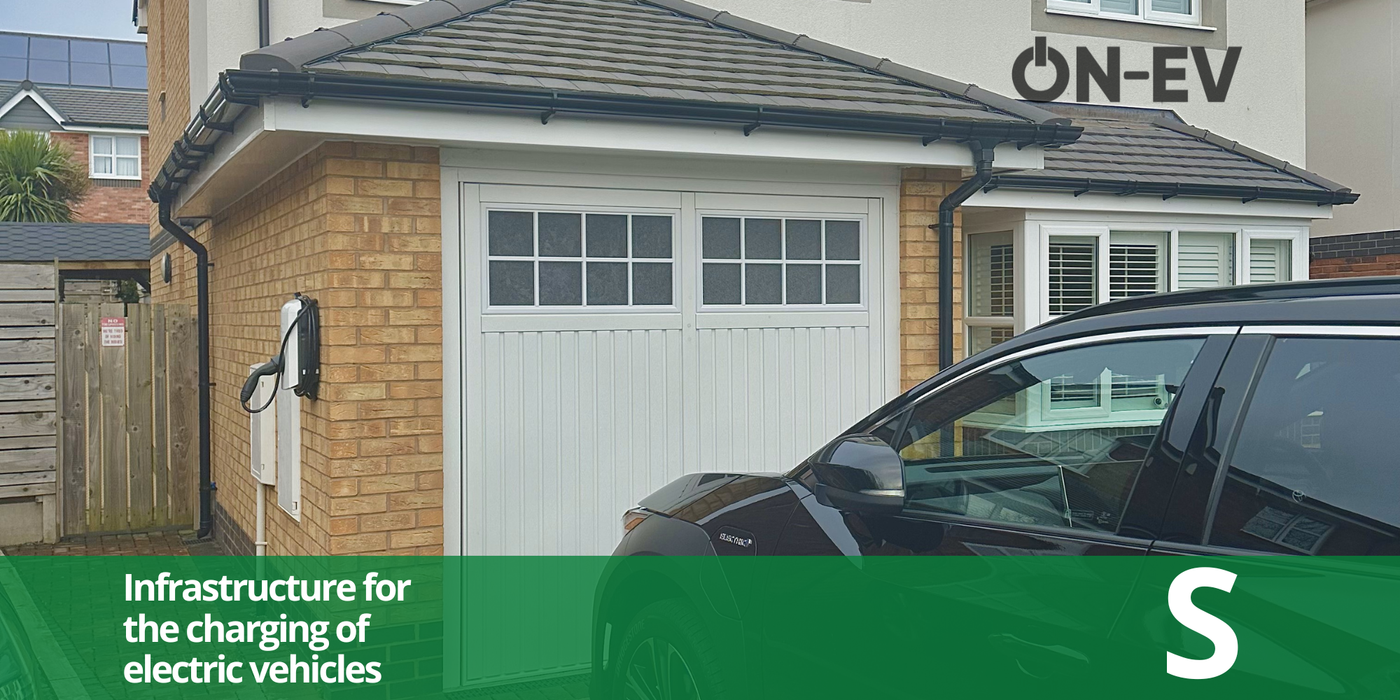
Part S of the Building Regulations has been in force since June 2022. It requires EV charging infrastructure to be included in new builds and certain conversions across England.
What is Part S?
Part S covers electric vehicle charging under the Building Regulations. It ensures new residential and non-residential buildings are EV-ready from the point of construction. The full document is Approved Document S, enforceable through Building Control.
Who does it apply to?
- New residential buildings with associated parking
- Residential buildings undergoing major renovation of 10 or more dwellings where parking is being created or altered
- New non-residential buildings with more than 10 parking spaces
- Non-residential buildings undergoing major renovation where more than 10 spaces are being created or altered
What does Part S require?
For new residential buildings, one charge point per dwelling with associated parking. The charge point must have a minimum rated output of 7kW, be a dedicated Mode 3 unit (not a 3-pin socket), be smart-enabled, and appear on the OZEV Approved Charger list.
Where a full charge point would cost over £3,600 per dwelling, the developer can install cable routes and containment instead. This pre-wiring provision is what most developers use on larger sites.
For new non-residential buildings with more than 10 parking spaces, at least one charge point is required with cable routes to 20% of remaining spaces.
Pre-wiring vs full installation
Retrofitting EV charging after a build is complete typically costs £1,500 to £3,000 per point, depending on the cable run and complexity. Where pre-wiring is already in place, the same job comes down to mounting the unit and making the final connection - usually £400 to £600 in installation labour on top of the charger cost.
Getting Part S right at build stage is the most cost-effective approach for both developers and buyers.
What does a compliant installation include?
- A dedicated circuit from the consumer unit to the parking space
- Correctly sized cable - typically 6mm or 10mm depending on run length
- Suitable containment throughout
- A weatherproof connection point or installed charge point
- Documentation for Building Control sign-off
Does Part S apply to commercial buildings?
Yes. New non-residential buildings with more than 10 parking spaces need at least one operational charge point and cable routes to 20% of remaining spaces. This covers offices, retail, leisure and most other use classes.
Frequently Asked Questions
Does Part S apply to extensions?
No. Standard house extensions and loft conversions do not trigger Part S. It applies to new buildings and major renovations meeting the thresholds in Approved Document S.
Does Part S apply in Wales and Scotland?
Part S applies in England only. Wales and Scotland have their own building standards with similar but separate EV charging requirements for new builds.
What if a developer does not comply?
Building Control will not issue a completion certificate without evidence of compliance. This affects mortgage lending and the ability to sell or occupy the building.
Can a buyer add a charger later if pre-wiring is in place?
Yes. With the circuit already installed, an OZEV-approved installer can fit a charge point quickly and at low cost.
Which charger brands are Part S compliant?
Any charger on the OZEV Approved Charger list. This includes Ohme, myenergi Zappi, Easee, Wallbox, Hypervolt, Andersen, Rolec and EO, among others.
For Part S pre-wiring or charge point installation on a new build or development, contact ON-EV on 07392 932200 or at info@on-ev.com.