
EV Charging Cable Care in Winter: Mud, Frost and Where to Store It
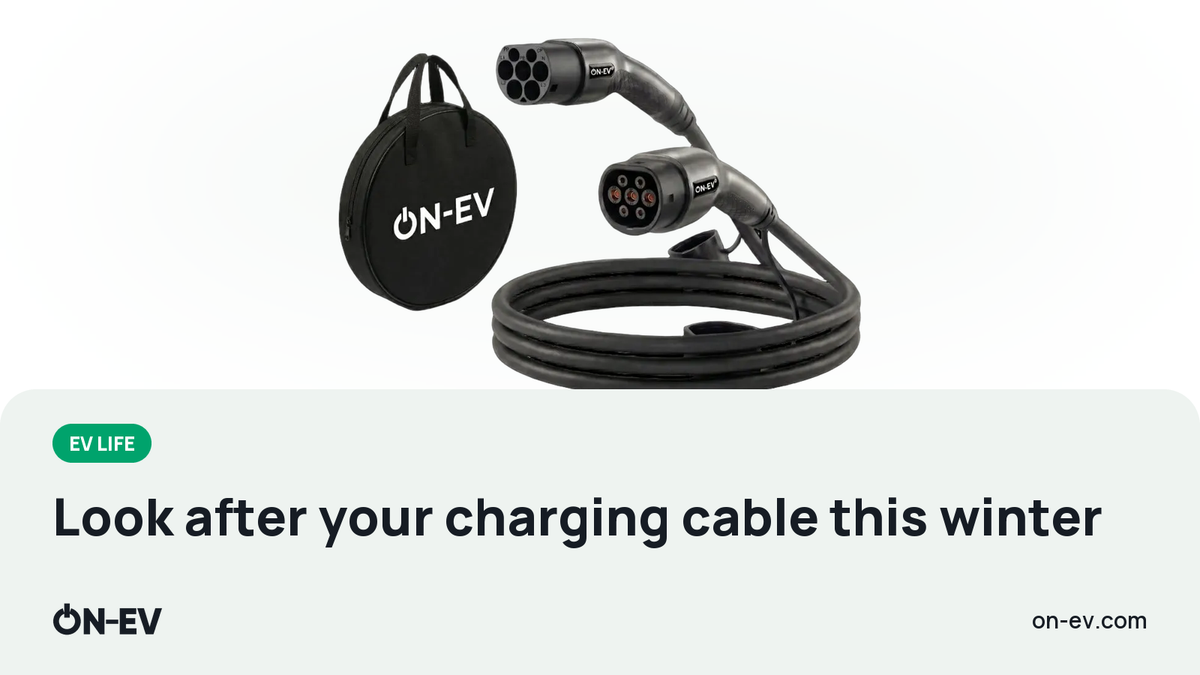
The Short Answer
Look after your EV charging cable in winter by coiling it in loose loops, wiping mud off the plug ends, keeping both ends off the ground and storing it somewhere dry. After a frost, check the sheath, the connector housings and the pins. Replace a cable with cuts, cracks or damaged pins rather than nursing it through the season.
How should I coil an EV charging cable without kinks?
Coil an EV charging cable in wide, loose loops, letting each loop lie the way the cable naturally falls. Do not twist it or pull the loops tight. A kink sets in the same place every time you coil it, and that spot wears first.
For a longer lead, lay the loops over and under in alternate directions so the twists cancel out as you pull it straight. Start at the car end when you unplug, so the wall end is the last thing you handle and the plug nearest the charger stays in view.
Uncoil the whole length before you start a session. A cable charging in a bundle on the drive is also a cable sitting in whatever puddle is underneath it. Our cable uses a TPU sheath that is UV resistant and flexible in cold temperatures, so frost does not stiffen it into a hoop, but loose loops still treat any cable better.
How do I keep the plug ends clean and dry in winter?
Wipe the plug ends of an EV charging cable with a damp cloth when you unplug, dry them, and put them somewhere off the ground. Mud that dries on a connector turns into grit, and grit gets into the contacts next time you plug in.
Our cable has IP65 rated connectors that are weatherproof for outdoor use, which covers rain falling on a plugged-in lead. It does not make a puddle a good place to leave the ends. Do not poke anything into the pin holes. If grit is stuck inside, stop using the cable.
A habit helps more than a gadget. Unplug, wipe, dry, coil, and the plug ends never touch the drive.
What should I check on my charging cable after a frosty night?
After a frost, check your charging cable for cuts or flattened patches in the sheath, cracks in the connector housings, bent or discoloured pins and a locking latch that sticks. Ice in a plug end should thaw by itself. Chipping it out damages the contacts.
Run the cable through your hands from one end to the other. Feel for soft spots, bulges or a sheath that has split. Pay most attention to the stretch that lay under or beside a tyre.

Our cable has locking connectors on both ends, so test that each one latches and releases cleanly. If a plug feels loose, grips poorly or looks scorched, take it out of use. Anything about the car's own charge port, such as ice in the inlet, belongs in the car's handbook.
Where should I store an EV charging cable in winter?
Store an EV charging cable indoors or in the boot, coiled loosely, with both plug ends off the floor and clear of mud. A hook or shelf in the garage or porch is better than a wet drive. Keep it away from where tyres and feet pass.

Leaving the lead outside every night is the quickest way to wear it. It collects mud, gets walked on and sits in standing water. If you carry the lead in the car for public charging, a bag or a box keeps wet plug ends away from the boot carpet and the grit out of the connectors.
Dry the cable before it goes into a bag. A damp lead sealed in a bag stays damp.
When is a worn charging cable worth replacing?
Replace a charging cable when the sheath is cut through, a connector housing is cracked, pins are bent or burnt, or a plug no longer locks. Surface scuffs are cosmetic. Anything that exposes the inside of the cable, or a connector that grips badly, is a reason to buy a new one.
If you replace the lead, our Type 2 cable runs Type 2 to Type 2 and is required for use with untethered (socketed) home chargers. It comes in three lengths. Our cable length guide covers which one suits your drive, so choose it by how far the car parks from the charger. A shorter lead means less cable to coil and dry each night. You can see more leads in our EV charging cables collection and storage extras in charging accessories.
| Item | Length | Price | Winter note |
|---|---|---|---|
| Our Type 2 EV charging cable | 5m | £89.00 | Least cable to coil and dry |
| Our Type 2 EV charging cable | 7.5m | £119.00 | Middle length |
| Our Type 2 EV charging cable | 10m | £143.00 | Most cable to keep off the ground |
| Ohme ePod | Untethered socket | £498.00 | You supply the lead |
Type 2 EV Charging Cable ON-EV
Does an untethered charger like the Ohme ePod change any of this?
An untethered charger such as the Ohme ePod has no fixed lead, so the lead you bring carries all the winter wear. The cable care above is your whole routine for the cable, and the charger's socket needs the same clean, dry plug end each time.

The ePod has an untethered Type 2 socket and takes any Type 1 or Type 2 cable, so the lead you buy to replace a worn one is your choice. It also carries a 3-year warranty. Wipe mud off the plug end before it goes into the socket, and ask your electrician where to site the charger. The Ohme ePod review covers the unit in detail.
Our tethered vs untethered guide sets out the trade-off, and our socketed charger kit cost post shows what the lead adds to the total.
Ohme ePod EV Charger
Frequently Asked Questions
Can I leave my EV charging cable on the drive overnight?
You can, but a lead left on the ground collects mud, gets walked on and sits in puddles. Coil it and hang it up or store it indoors after each session, and it will last longer.
Does cold weather damage an EV charging cable?
Frost alone is rarely the problem. Wear comes from kinks, tyres, grit and standing water. Our cable has a TPU sheath that is UV resistant and flexible in cold temperatures, so the routine above covers the rest.
Can I wash mud off my charging cable?
Wipe it with a damp cloth and dry it, rather than soaking the plug ends. Keep the connectors out of standing water and never push anything into the pin holes.