
Auswahl eines Heim-EV-Ladegeräts im Jahr 2026: Worauf es ankommt
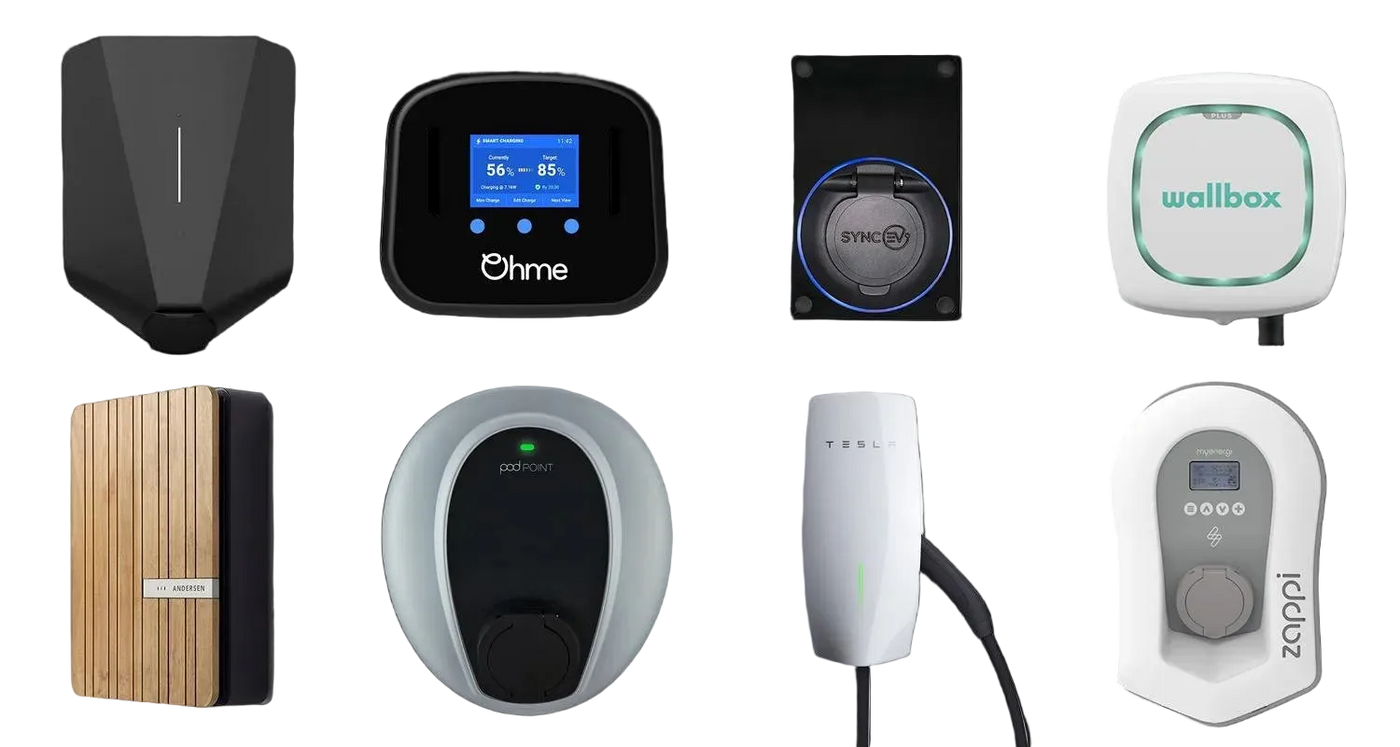
Der ehrliche Kaufberater
Die meisten Vergleichsartikel zu Heim-EV-Ladegeräten behandeln jede Spezifikation als gleich wichtig. Das sind sie nicht. Einige wenige Entscheidungen bestimmen den Großteil des Unterschieds zwischen einem Ladegerät, das zu Ihrem Zuhause passt, und einem, das Sie in den nächsten fünf Jahren frustriert. Dieser Leitfaden behandelt diese Entscheidungen in der Reihenfolge ihrer Bedeutung.
Hier starten: OZEV-Zuschussberechtigung
Bevor Sie ein Ladegerät auswählen, prüfen Sie, ob Sie für den UK Government EV Chargepoint Grant berechtigt sind. Der Zuschuss deckt bis zu 75 % der Kosten für Kauf und Installation eines Ladegeräts, maximal 350 £. Um berechtigt zu sein, müssen Sie in einer Wohnung oder Mietimmobilie mit privatem Parkplatz wohnen oder bestimmte andere Kriterien erfüllen, je nach Ihrer Situation.
Wenn Sie berechtigt sind, muss Ihr Ladegerät von der OZEV-zugelassenen Liste stammen. Ein Kauf außerhalb dieser Liste bedeutet, dass Sie die Kosten vollständig selbst tragen. Die meisten von ON-EV gelieferten Ladegeräte sind OZEV-zugelassen, aber der Tesla Wall Connector Gen 3 nicht. Es lohnt sich, vor dem Kauf zu prüfen.
Leistungsausgang: 3,6 kW oder 7,4 kW
Jedes im Jahr 2026 verkaufte Heimladegerät arbeitet entweder mit 3,6 kW oder 7,4 kW an einer standardmäßigen einphasigen UK-Stromversorgung. Die 7,4-kW-Option lädt etwa doppelt so schnell. Bei einer 60-kWh-Batterie dauert es etwa 8 Stunden statt 16 Stunden bei 3,6 kW.
Für die meisten Fahrer, die über Nacht laden, reicht jede Geschwindigkeit für eine vollständige Ladung aus. Aber 7,4 kW bieten mehr Flexibilität an längeren Tagen, unterstützen größere Batterien bei Fahrzeug-Upgrades und kosten gleich viel in der Installation. Kaufen Sie 7,4 kW, es sei denn, Ihr spezielles Fahrzeug begrenzt das AC-Laden auf 3,6 kW. Einige ältere Plug-in-Hybride tun das. Prüfen Sie im Zweifel das Handbuch Ihres Autos.
Drehstromanschlüsse (in einigen neueren Gebäuden und Gewerbeimmobilien zu finden) können 22 kW unterstützen. Ladegeräte wie der Myenergi Zappi und Andersen Quartz bieten Drehstrommodelle an, wenn Ihre Immobilie über diese Versorgung verfügt.
Fest angeschlossen oder nicht fest angeschlossen
Ein fest angeschlossenes Ladegerät hat ein fest angebrachtes Kabel an der Einheit. Ein nicht fest angeschlossenes Ladegerät hat eine Steckdose, und Sie bringen Ihr eigenes Kabel mit.
Fest angeschlossen eignet sich für die meisten Heimnutzer. Das Kabel ist immer vorhanden, Sie stecken ein und können weggehen. Kein Kabel zum Verstauen, kein Kabel, das vergessen wird. Der Nachteil ist, dass das Kabel an der Wand befestigt ist, sodass Sie bei einem anderen Auto mit einem anderen Steckertyp möglicherweise eine neue Einheit benötigen.
Nicht fest angeschlossen eignet sich für Haushalte mit mehreren Elektrofahrzeugen, die unterschiedliche Steckertypen verwenden, Fahrer, die bereits ein gutes Kabel besitzen, und alle, die die Hardware möglichst minimal halten möchten. Der Nachteil ist, dass das Kabel im Auto oder in der Nähe aufbewahrt werden muss und man daran denken muss, es mitzunehmen.
In der Praxis entscheiden sich die meisten Käufer im Vereinigten Königreich mit einem einzigen Elektrofahrzeug für ein fest angeschlossenes Ladegerät. Die meisten Haushalte mit zwei verschiedenen Elektrofahrzeugen wählen ein nicht fest angeschlossenes Ladegerät.
Solar-Kompatibilität
Wenn Sie Solarpanels haben, leitet ein solar-kompatibles Ladegerät überschüssige Energie in Ihr Auto, anstatt sie zu einem niedrigen Tarif ins Netz einzuspeisen. Je nach Systemgröße und Fahrgewohnheiten können so über ein Jahr mehrere hundert Pfund an vermiedenen Ladekosten gespart werden.
Der Myenergi Zappi ist der britische Marktstandard für Solarumleitung. Drei Lademodi geben Ihnen Kontrolle darüber, wie das Ladegerät zwischen Solar- und Netzstrom aufteilt. Der Hypervolt Home 3 Pro, EO Mini Pro 3 und mehrere andere unterstützen Solar ebenfalls über CT-Klemme. Der entscheidende Unterschied ist, ob die Solarintegration im Grundpreis enthalten ist oder zusätzliches Zubehör erfordert.
Myenergi Zappi V2 | 7,4 kW | Großbritanniens Nr. 1 Solar-EV-Ladegerät
Integration intelligenter Tarife
Intelligente Tarife wie Octopus Go und Intelligent Octopus berechnen deutlich weniger pro kWh während der Nebenzeiten über Nacht. Ein Ladegerät, das sich in Ihren Tarif integriert, kann Ladevorgänge während günstiger Zeiten automatisch planen, ohne dass Sie es jede Nacht manuell einstellen müssen.
Der Ohme Home Pro führt diese Kategorie an. Er verbindet sich mit Intelligent Octopus und liest Live-Preise, um das Laden in Echtzeit anzupassen. Er nutzt eine integrierte 4G-SIM statt Ihres Heim-WLANs, was wichtig ist, wenn Ihr Router weit vom Ladegerät entfernt ist. Der Hypervolt Home 3 Pro und der Wallbox Pulsar Max unterstützen Intelligent Octopus ebenfalls nativ.
Wenn Sie einen Standard-Festtarif ohne Nebenzeiten haben, ist dieses Feature weniger wichtig. Ein einfacher Zeitplaner reicht aus.
Ohme Home Pro | 7,4 kW intelligentes Ladegerät mit LCD-Bildschirm
Wetterfestigkeit: IP-Schutzarten erklärt
Die IP-Schutzart gibt an, wie gut das Gerät Wasser widersteht. Die meisten Heimladegeräte haben IP54, was Regen und allgemeiner Außenbelastung an geschützten Wandpositionen standhält. IP65 und höher vertragen dauerhafte Wasserstrahlen und können an exponierten Wänden ohne Überdachung montiert werden.
| Bewertung | Schutz | Geeignet für |
|---|---|---|
| IP44 | Spritzwasser aus allen Richtungen | Nur geschützte Positionen |
| IP54 | Teilweise staubdicht, begrenzte Wasserstrahlen | Typische Außenwände in Großbritannien |
| IP65 | Staubdicht, Wasserstrahlen | Exponierte Außenpositionen |
| IP66 | Staubdicht, starke Wasserstrahlen | Jeder Außenstandort |
Der Hypervolt Home 3 Pro hat die Schutzart IP66, die höchste Bewertung im Mainstream-Heimladermarkt. Wenn Ihr Ladegerät an einer exponierten Giebelseite oder einer Wand sitzt, die direktem Regen ausgesetzt ist, nimmt IP66 Ihnen jede Sorge.
Hypervolt Home 3 Pro | 7,4 kW | IP66 | OZEV zugelassen
Kabellänge
Die meisten fest angeschlossenen Ladegeräte werden mit einem 5 m Kabel geliefert. Das deckt die Mehrheit der Einfahrten und Garagen ab. Wenn Ihr Parkplatz weiter von der Wand entfernt ist oder Sie die Flexibilität wünschen, beide Seiten des Autos zu erreichen, sind längere Kabel wichtig.
Der Hypervolt Home 3 Pro bietet Optionen mit 5 m, 7,5 m und 10 m Kabel. Der Wallbox Pulsar Max wird standardmäßig mit einem 7 m Kabel geliefert. Der Tesla Wall Connector Gen 3 verwendet ein 7,3 m langes Kabel. Wenn Sie ein Ladegerät mit 5 m Kabel kaufen und eine lange Einfahrt haben, messen Sie vor dem Kauf nach.
Garantie
Die meisten Heimladegeräte haben eine dreijährige Garantie. Der Andersen A3 bietet sieben Jahre, die längste auf dem Markt. Der Wallbox Pulsar Max bietet fünf Jahre. Längere Garantien sind wichtig, wenn Sie erwarten, in der Immobilie zu bleiben und Reparaturkosten aus eigener Tasche während der Besitzdauer vermeiden möchten.
Design und Ästhetik
Für die meisten Käufer steht das Ladegerät in der Garage oder an einer Seitenwand, und das Design ist zweitrangig gegenüber der Funktion. Für Käufer, die es an einer Frontfassade oder in einem sorgfältig gestalteten Raum montieren, ist das Design wichtiger.
Der Andersen A3 ist das einzige Heimladegerät mit einem versteckten Kabelsystem und 247 Farb- und Finish-Kombinationen, darunter echtes Accoya-Holz. Es ist auch das teuerste. Wenn das Ladegerät so aussehen soll, als gehöre es zur Immobilie und sei nicht nur angeschraubt, ist der A3 in einer eigenen Kategorie.
Andersen A3 | 7,4-kW-Premium-Ladegerät mit verstecktem Kabel | 247 Farben
Unsere Empfehlung nach Situation
| Ihre Situation | Empfohlenes Ladegerät |
|---|---|
| Solarmodule, wollen kostenloses Laden maximieren | Myenergi Zappi V2 |
| Bei Intelligent Octopus- oder variablen Tarifen | Ohme Home Pro |
| Freiliegende Außenwand, wollen IP66 | Hypervolt Home 3 Pro |
| Design ist wichtig, Frontfassaden-Installation | Andersen A3 |
| Tesla-Fahrer, wollen native App-Integration | Tesla Wall Connector Gen 3 |
| Zwei Elektrofahrzeuge, wollen Flexibilität | Easee One |
| Kompakte Bauweise mit integriertem Solarmodul | EO Mini Pro 3 |
| Bestes Preis-Leistungs-Verhältnis mit 7m Kabel | Wallbox Pulsar Max |
Kostenloses Angebot von ON-EV anfordern
ON-EV liefert und installiert Heimladegeräte für Elektrofahrzeuge in ganz Nordwales und Nordwestengland. Alle Installationen werden von OZEV-zugelassenen Technikern durchgeführt. Wenn Sie wissen, welches Ladegerät Sie möchten, können Sie direkt bestellen. Wenn Sie eine Empfehlung basierend auf Ihrer Immobilie und Ihren Fahrgewohnheiten wünschen, nehmen Sie Kontakt auf, und wir weisen Ihnen den richtigen Weg.
Durchsuchen Sie das vollständige ON-EV-Sortiment an Heimladegeräten für Elektrofahrzeuge
Häufig gestellte Fragen
Brauche ich ein intelligentes Ladegerät?
Wenn Sie einen Zeit-Tarif wie Octopus Go haben, spart ein intelligentes Ladegerät, das das Laden in Nebenzeiten plant, Geld. Bei einem Standardtarif ohne Nebenzeiten sind die intelligenten Funktionen weniger wichtig, aber dennoch nützlich zur Überwachung.
Kann jedes Ladegerät mit jedem Elektrofahrzeug verwendet werden?
Alle Typ-2-Ladegeräte funktionieren mit allen aktuellen Elektrofahrzeugen in Großbritannien. Der Steckertyp ist auf dem britischen Markt standardisiert. Ältere Fahrzeuge mit Typ-1-Steckern benötigen einen Adapter oder ein nicht fest angeschlossenes Ladegerät mit Typ-1-Kabel.
Wie lange dauert die Installation?
Die meisten Heimladegeräte-Installationen dauern zwei bis vier Stunden. Die Kabellänge und die Position des Sicherungskastens beeinflussen die Dauer. ON-EV-Installationen können in der Regel innerhalb einer Woche nach Bestellung gebucht werden.
Ist ein eigener Stromkreis erforderlich?
Ja. Jedes 7,4-kW-Ladegerät benötigt einen eigenen 32A-Stromkreis, der von Ihrem Sicherungskasten verlegt wird. Ihr Installateur übernimmt dies als Teil der Installation.
Qualifizieren sich alle Ladegeräte für den OZEV-Zuschuss?
Nein. Das Ladegerät muss auf der OZEV-zugelassenen Liste erscheinen. Die meisten Ladegeräte, die ON-EV liefert, sind OZEV-zugelassen. Der Tesla Wall Connector Gen 3 ist es nicht. Prüfen Sie vor dem Kauf, ob der Zuschuss für Ihre Entscheidung wichtig ist.