
Electric Car Charger Installation Cost: 7 Things That Change Your Quote
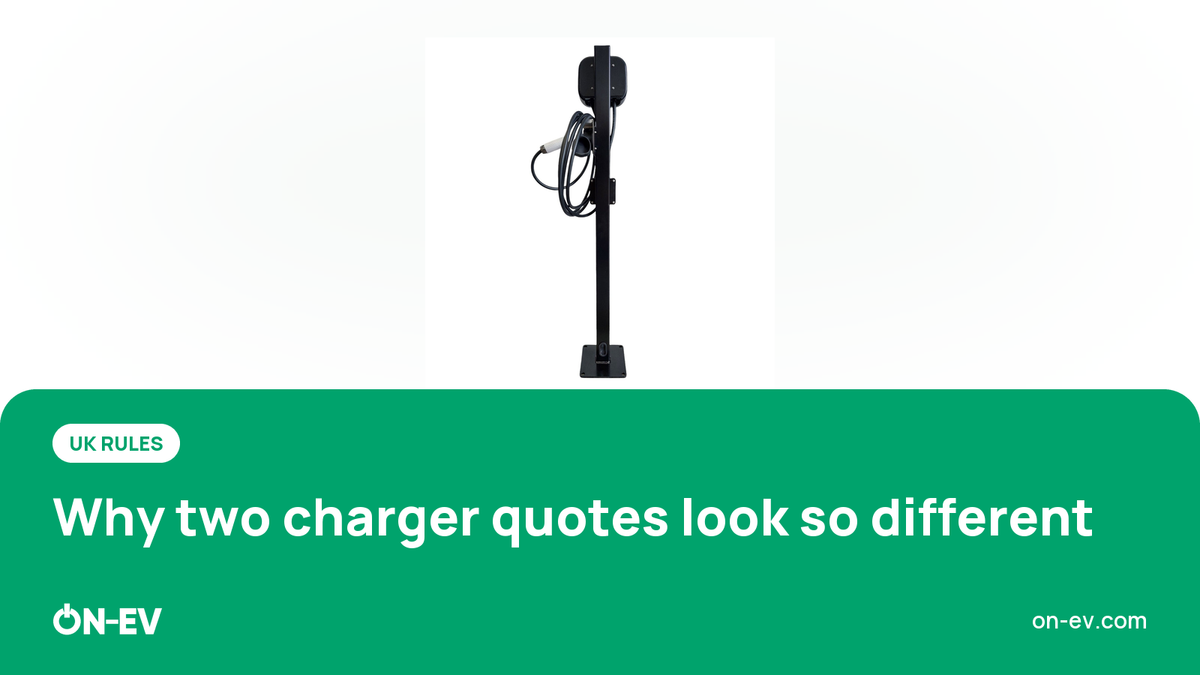
The Short Answer
Electric car charger installation cost depends on seven things the electrician has to price: the cable run from your consumer unit, the state of the board, earthing, wall or post mounting, ground work, load management and what the quote includes. Two quotes differ because each assumes different answers. We give no fitting prices here, because only a visit to your property sets them.
Why do two quotes for the same charger look so different?
Two quotes for one charger differ because each electrician has priced a different job. One assumes a short run to a wall. Another assumes a longer route, a board that needs work or a post in the ground. The charger is the same, but the work around it is not.
The seven things that move a quote are:
- The cable run from the consumer unit to the charger
- Whether the consumer unit has space or needs work
- The earthing arrangement at your property
- Wall or post mounting
- Ground work if the charger sits on a post
- Whether load management is needed
- What the quote includes and who supplies the equipment
We sell charging equipment and do not fit it, so the prices we can give are for hardware. Fitting prices come from your electrician.

How does the cable run from the consumer unit change the price?
The supply cable run is the cable from your consumer unit to the charger. A longer run needs more cable and more labour. A route through a wall, under a floor or across a driveway costs more than a short run along an outside wall to a unit next to the board.
This is a different cable from the one that plugs into your car. If you are weighing up how long that one should be, our Type 2 cable length guide covers it. For the quote, tell every electrician where the car parks and where the board is, so they price the same route.
Does the consumer unit or earthing affect the quote?
Consumer unit condition and earthing both affect the quote. A board with a spare way and enough capacity is the cheap case. A full or older board may need work before a charger circuit can be added, and some earthing arrangements call for extra work. The electrician checks both on the visit.
Ask each electrician to say in writing what they found on the board and the earthing, and what work they have priced because of it. A quote that skips this line may be the low one because the work shows up later as an extra.
Wall or post: how does mounting change the cost?
Wall mounting is the simpler option when an external wall sits within reach of the parking space. Our own guide to chargers on posts says most home installs mount the charger on an external wall. A post suits drives and car ports where no wall is close enough, and it adds hardware and ground work to the quote.
A post can also carry two chargers. Our charger post guide explains when a post is the right route, and you can browse EV charger posts and installation kits if you want to price the equipment yourself.
Value Square Post
The table shows the hardware side of those choices at our current catalogue prices.
| Item | What it is for | Price |
|---|---|---|
| Value Square Post, single mount (Easee One variant) | Carries one charger away from a wall | £164.00 |
| Value Square Post, double mount (Easee One variant) | Carries two chargers on one post | £189.00 |
| Ground Box for Plinth Mounted Posts | Conceals the post base on a plinth | £109.99 |
| Easee Equalizer, 100A Single Phase | Load management for Easee chargers | £124.00 |
| Easee Equalizer, 100A Three Phase | Load management for Easee chargers | £408.00 |
Variants of the Value Square Post for other charger models are listed on the product page, and the plate is specific to the charger.

What ground work does a post need?
A post needs ground work, and the surface decides how much. Our post guide says installers set the Value Square Post in the ground on a concrete footing and run the supply cable underground in ducting. A lawn, a gravel drive and a paved bay each ask for different digging and making good.
Ask the electrician which surface they have assumed and who reinstates it. If your installer specifies a plinth-mounted post, the Ground Box for Plinth Mounted Posts is a weather-resistant steel housing that conceals the post base. The post and the box together run to £164.00 plus £109.99 before any labour.
Ground Box for Plinth Mounted Posts
When does a home charger need load management?
Load management matters when your charger and the rest of the house could together draw more than the main fuse allows. The Easee Equalizer monitors total household current and adjusts the connected Easee charger output to stop the main fuse tripping. Adding it changes the quote, so ask whether the electrician has included it.
The Equalizer is also required to enable dynamic load management and solar charging on Easee chargers. It works with Easee chargers only, so it is no use alongside another brand. It comes in single phase and three phase versions, and the electrician can tell you which suits your supply.
Easee Equalizer | Load Management | Single & Three Phase
What should you ask so two quotes compare fairly?
Ask every electrician the same questions and get the answers in writing. A fair comparison needs the same charger, the same cable route and the same mounting assumed on each quote, with every extra listed as a line. A single total tells you little.

Give each electrician the charger model before they quote, since the model decides the mounting plate and whether load management applies. Our guide to choosing a home EV charger helps you settle that first. If you buy the equipment from us and the electrician quotes labour only, the two quotes are easy to line up, and you can browse our post range before you ask.
Frequently Asked Questions
How much does electric car charger installation cost?
We quote no fitting prices because they depend on your property. The cable run, the consumer unit, earthing, mounting, ground work and load management all move the figure, so get itemised quotes after a site visit.
Do I need a post for my EV charger?
No. A wall is the simpler choice when one sits within reach of your parking space. A post makes sense when there is no suitable wall, and it adds equipment and ground work to the quote.
Why is one electrician's quote so much lower than another's?
The lower quote may assume a shorter cable run, leave out board work or ground reinstatement, or not include load management. Ask both to list what they have priced and what they have excluded.